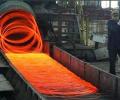
Although two-way trade has grown 10-fold since 2000 and is expected to exceed $3 billion this year, according to the Ministry of External Affairs, India's flagship foreign direct investment project in Vietnam -- Tata Steel's proposed $5 billion facility -- remains stalled, largely owing to pending governmental approvals.

Unfazed by Chinese objections, India and Vietnam today inked an agreement to promote oil exploration in South China Sea along with a slew of pacts, including an extradition treaty, to deepen trade, security and strategic ties between the two countries.

The agreement between the two airlines came on the second day of the four-day state visit of Mukherjee to the country.
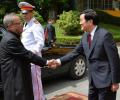
India and Vietnam on Monday inked seven pacts, including one to enhance cooperation in the strategic oil sector, as they called for "freedom" of navigation in the South China Sea, a remark which could irk China, which has been claiming territorial sovereignty over the high seas.

When Vietnam's India born Foreign Minister Pham Binh Minh arrives in New Delhi on Wednesday evening, he will have many areas of similar interest to discuss with his counterpart, External Affairs Minister Salman Khurshid.
Modi's Vietnam visit is timely and crucial for several reasons. First, Vietnam lies at the heart of India's vision for Southeast Asia as also its 'Act East' policy. India also wants to boost its defence exports to friendly countries. And it is looking to increase trade between the two countries will now is only $7.83 billion, says Dr Rahul Mishra.
